Homeowners associations (HOAs) are becoming an increasingly important factor in today’s real estate market — especially here in Florida. Whether you’re buying a condo, selling a townhome, or evaluating a community with shared amenities, HOA fees now play a bigger role than ever in affordability, resale value, and buyer decision-making.
Nationally, the share of for-sale homes governed by a homeowners association continues to climb. According to the latest Realtor.com® HOA report, 43.6% of active listings in 2025 were subject to an HOA fee, up from 41.9% just one year earlier. That trend reflects a growing preference for managed communities, shared amenities, and maintenance-included living — but it also comes with rising costs.
HOA Fees Are Rising Nationwide
Along with the increase in HOA-governed properties, monthly HOA dues are also going up. The national median HOA fee rose from $125 per month in 2024 to $135 per month in 2025, an 8% year-over-year increase. While that may sound manageable at first glance, the real story emerges when HOA costs are compared to monthly mortgage payments.
A recent analysis looked at how much the typical HOA fee represents as a percentage of the monthly principal and interest payment on a median-priced home in each metro area. That’s where Florida clearly stands out — and not in a subtle way.
Last year I published a video about Florida HOA fees and what to know.
Florida Homeowners Carry the Heaviest HOA Burden
Florida metros dominate the list of areas where HOA fees consume the largest share of a homeowner’s monthly housing payment.
In Miami, the owner of a median-priced $425,000 home pays approximately $617 per month in HOA fees, which equals 26.9% of the monthly mortgage payment. That means more than a quarter of the housing cost is going toward the association — before property taxes, insurance, or maintenance are even considered.
Other Florida markets follow closely behind:
- Panama City, FL: HOA fees equal 22.7% of the monthly mortgage payment
- Naples, FL: 20.3%
- Cape Coral, FL: 19.6%
- Port St. Lucie, FL: 18.9%
This concentration highlights a reality buyers and sellers must understand: HOA costs are not just a line item — they are a major affordability factor, especially in condo-heavy coastal markets.
What This Means for Buyers
For buyers, especially those relocating to South Florida, HOA fees can come as a surprise. Two condos with the same purchase price can have different monthly carrying costs depending on the building, reserves, amenities, and management structure.
Smart buyers today are:
- Comparing HOA fees building-by-building, not city-by-city
- Evaluating what the fee actually covers (insurance, reserves, amenities, staffing)
- Understanding how HOA dues impact loan approval and long-term affordability
In many cases, a higher HOA fee may be justified by strong reserves, updated infrastructure, and inclusive amenities. In others, a lower fee may signal deferred maintenance or future special assessments. Context matters.
What This Means for Sellers
For sellers, HOA fees are now part of the pricing conversation — whether they like it or not. Buyers are more educated, lenders are more cautious, and monthly payment math matters more in a higher-rate environment.
Sellers in HOA communities should be prepared to:
- Clearly explain what the HOA fee includes
- Highlight recent upgrades, reserves, and building improvements
- Price strategically when competing against buildings with lower monthly dues
In markets like Delray Beach, where condo inventory varies widely by building age, location, and amenities, education becomes a competitive advantage.
A Local Perspective on Downtown Delray Beach
HOA fees in Downtown Delray Beach can vary significantly from one building to the next — even within the same block. Waterfront exposure, building height, staffing, insurance requirements, and amenities all play a role.
That’s why understanding HOA fees per building, not just city averages, is critical. Buyers looking downtown and sellers preparing to list benefit most from hyper-local insight, not national headlines.
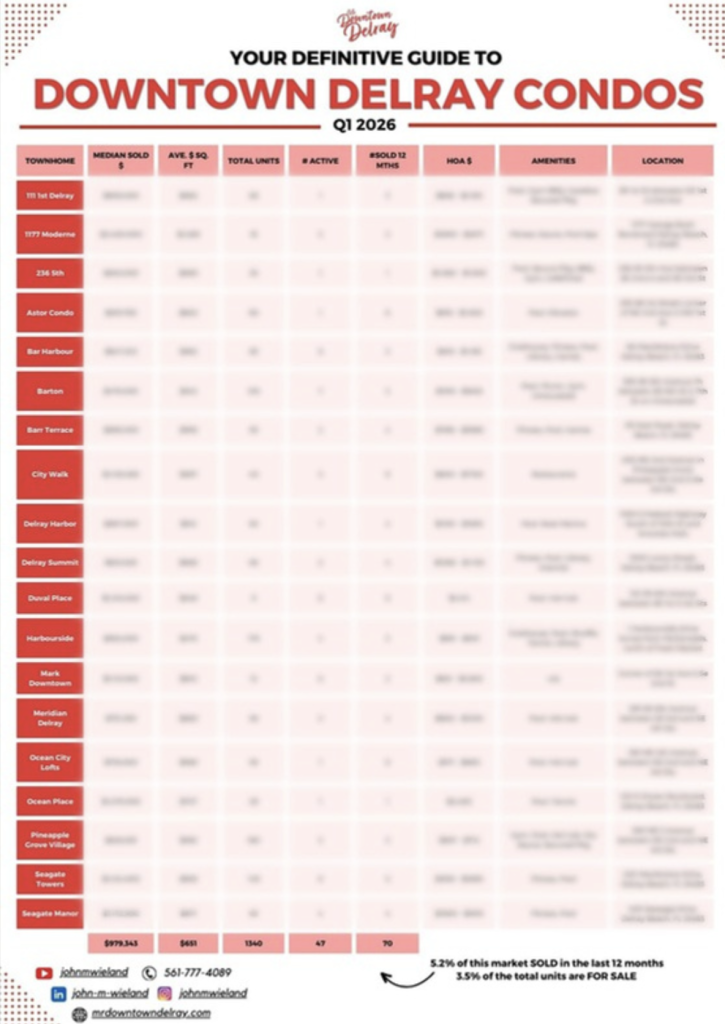
For those navigating the downtown condo market, my Condo Guide to Downtown Delray Beach breaks down HOA fees by building, outlines amenities, and explains what matters most when comparing communities.
The Bottom Line
HOA fees are rising nationwide, but Florida homeowners feel the impact more than anyone. For buyers, they directly affect affordability. For sellers, they influence demand, pricing, and time on market.
The key in today’s market isn’t avoiding HOAs — it’s understanding them. When buyers and sellers are properly informed, HOA communities can still offer tremendous value, lifestyle benefits, and long-term appeal.
As always, the smartest moves happen when data meets local knowledge.
—————————————-
Could FLORIDA HOA Fees Be Driving Buyers Away? The national HOA fee in the US is about $135 per month. In Miami – one of the fastest growing real estate markets – the average HOA is about $629 per month.